
The A.D.A.M. Method
A Nervous System Based Model of Performance Behavior
Technique is not just mechanical.
It emerges from patterns in the nervous system.
This page outlines the conceptual
foundations of the Affective Drumming
Awareness Model (A.D.A.M.), a nervous
system based model of performance
behavior.
Originally developed within the context of
drumming, the model explores how
feeling serves as a primary tool for integrating
emotion, movement, behavior, and
technique to benefit skilled performance.
Rather than approaching technique as an
isolated mechanical skill, the model
proposes that technique emerges from a
behavioral chain in which emotional state,
movement organization and behavior interact
dynamically within the nervous system.
This chain spans both voluntary and
involuntary processes, linking preattentional
emotional patterns with intentional movement
and learned technique.
🔶 Emotion organizes movement
♦️ Movement becomes behavior
🔷 Behavior shapes technique
Understanding this chain reveals how
emotional states and movement patterns
shape the technical outcomes performers
experience and practice to achieve.
The materials below outline the development
of this framework, from the
personal observations that led to its
creation to the broader implications for
music education, motor learning,
and high-performance training.
This page is intended for collaborators,
educators, and researchers interested in
the conceptual foundations of the Somatic
Drummer approach.
THE A.D.A.M. METHOD
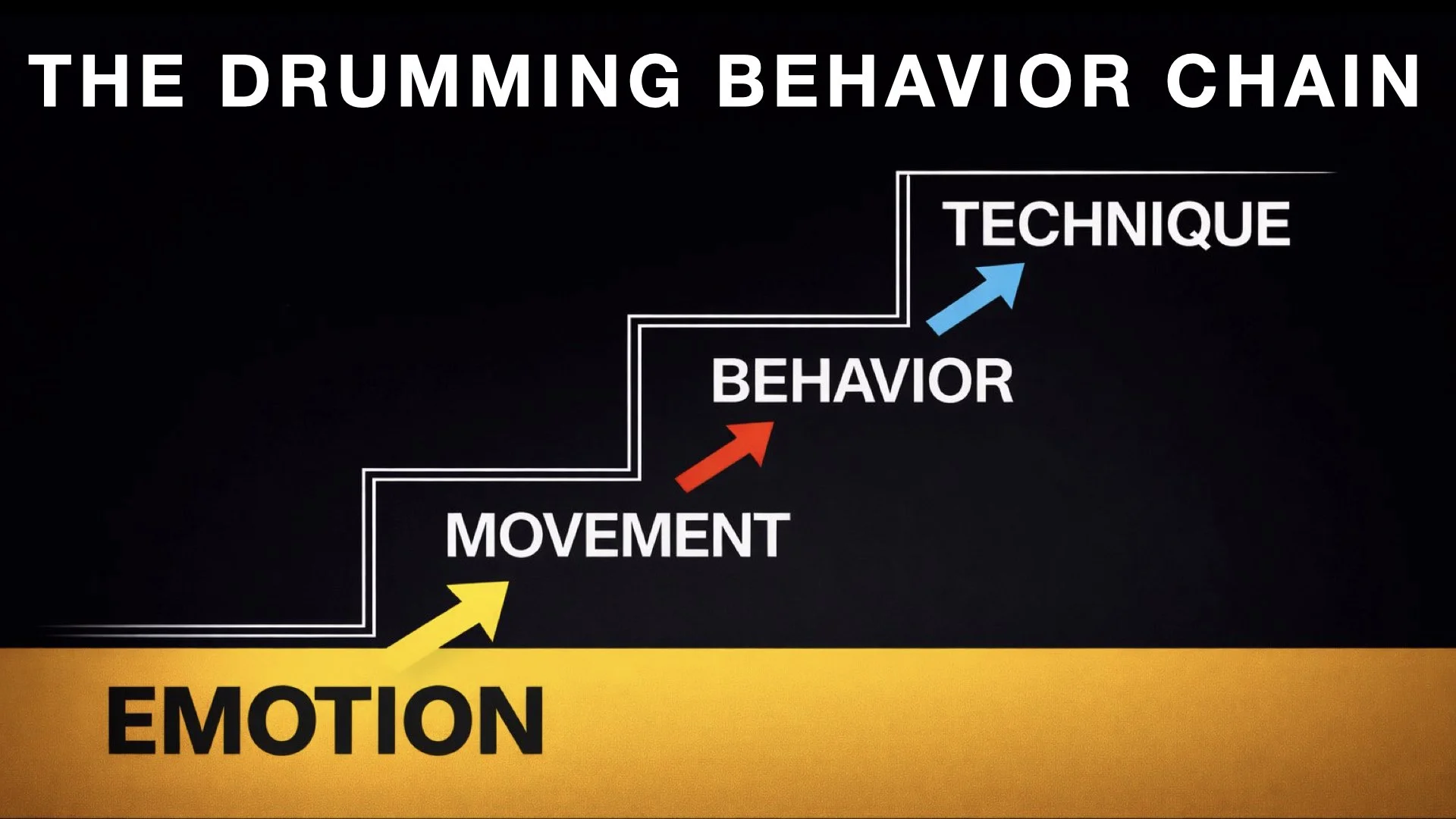
Drumming Behavior Chain:
🔶 Emotion Organizes Movement
♦️Movement Becomes Behavior
🔷Behavior Shapes Technique
FRAMEWORK OVERVIEW
Problem: Technique Iceberg
Discovery: Sequence Error
Principle: Technique is Relational
Intervention: Rudiments for Your Rudiments
Foundation: Red Light Moment
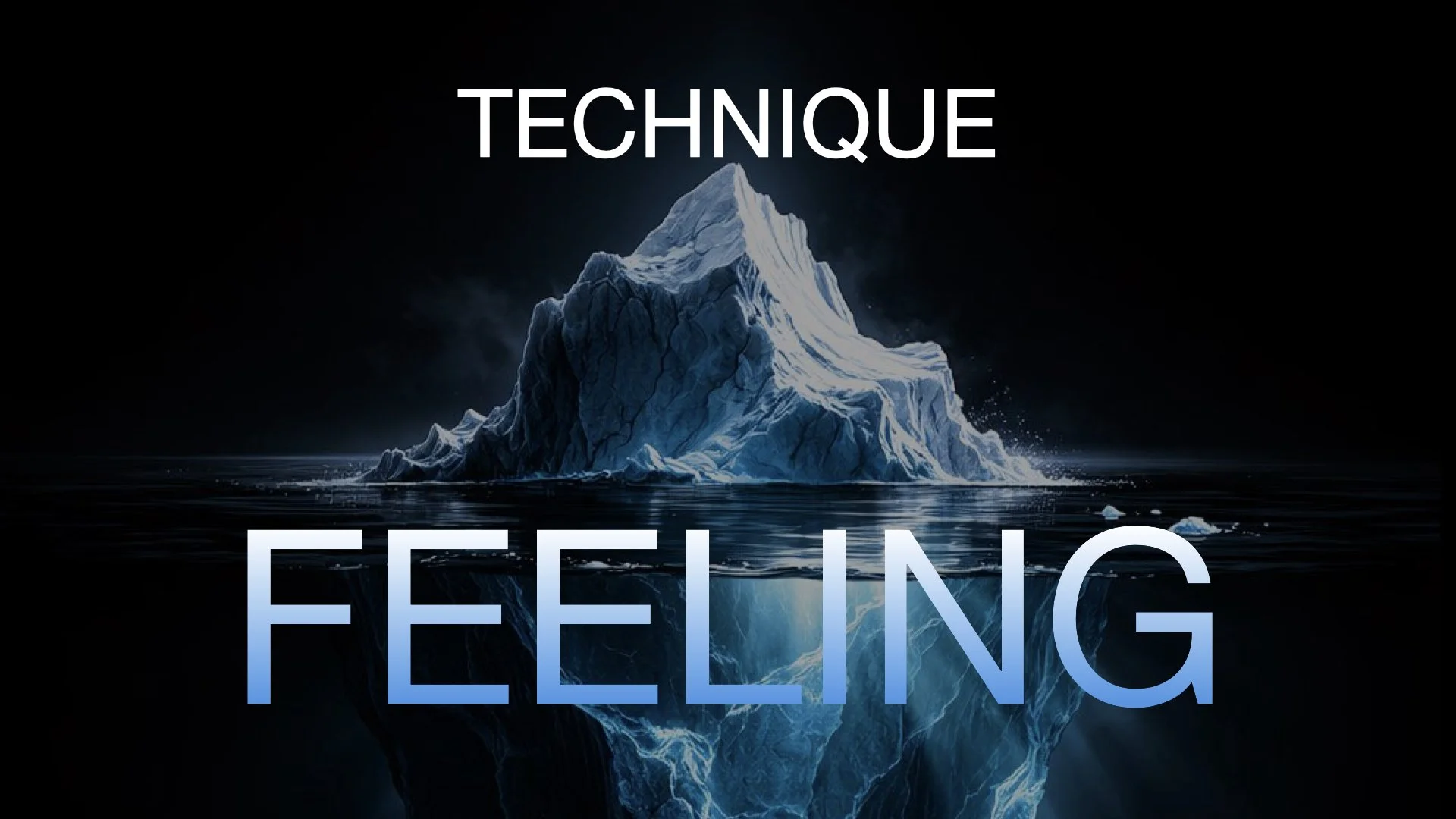
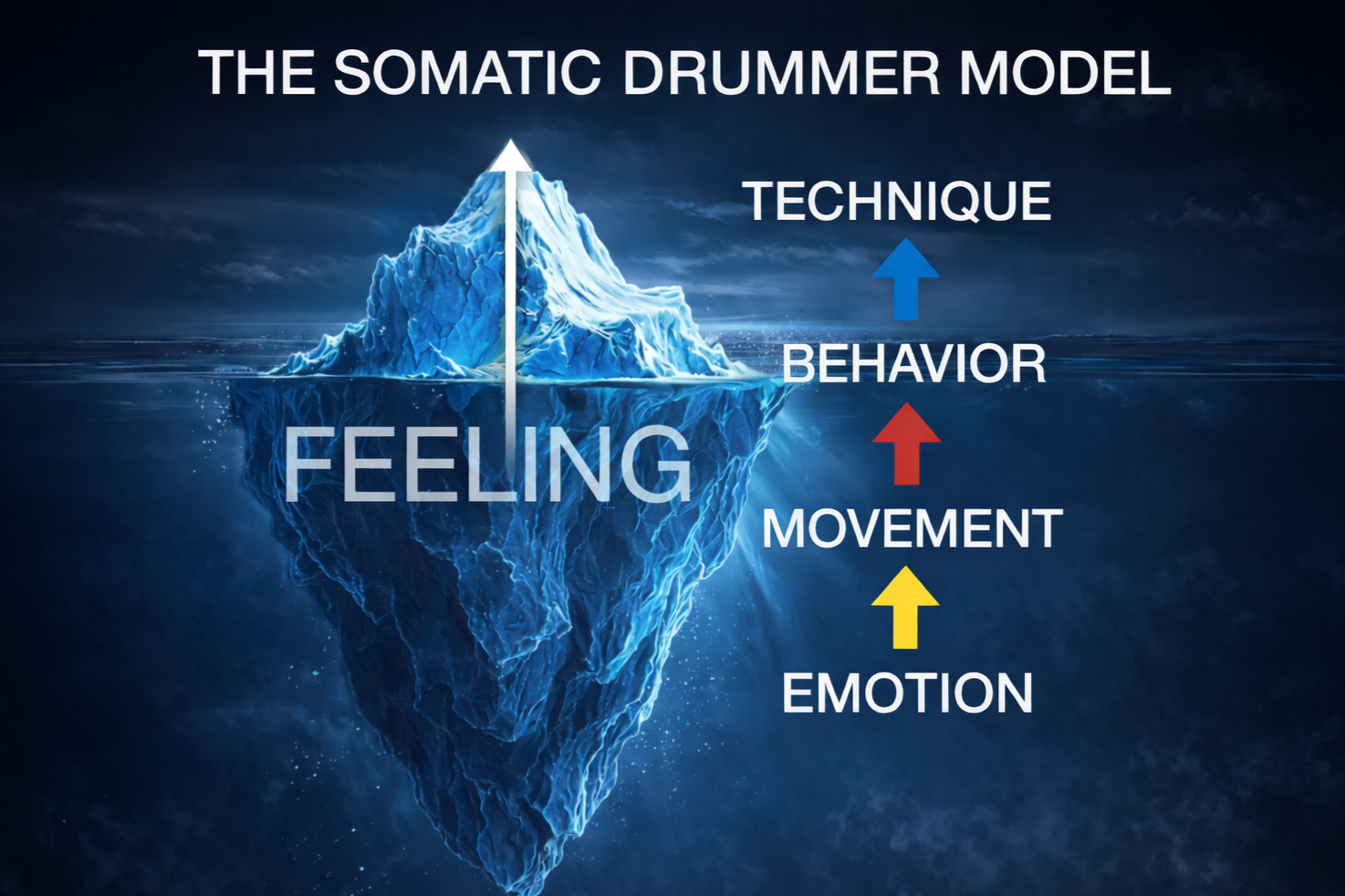
The Technique Iceberg
Most performers work on technique,
but very few work on what keeps it afloat.
The problem?
Technique doesn’t float by itself.
Here’s the shift:
Technique floats on
the ocean of your
nervous system.
Within that ocean are currents.
We experience those currents as feelings.
Neuroscience and psychology call those
currents emotional states—
and they quietly organize how we move.
Technique is the visible tip floating above
those deeper emotional currents,
and most performers never look
below the surface.
But when we submerge our attention
below the waterline,
we notice something else is organizing the
movements beneath our technique:
🔶 Emotion organizes movement
♦️Movement becomes behavior
🔷Behavior shapes technique
This is the Drumming Behavior Chain.
The chain shows you how to stop
fighting your technique—
by stabilizing the structure beneath it.
This isn’t theory to me.
It came from an injury that forced me to
rethink everything I thought I knew about
practice.
Once this mechanism becomes visible,
practice is better directed toward
aligning intention with action.
Part 1 “The Origin”
How an injury led to the ADAM Method
The Sequence Error
“You have to have that consciousness—
where and how to break that circle.
Where is that point of entry?”
-Dr. Anna Detari
Performance Science Researcher
Dr. Detari’s research into musician
tension disorders revealed something larger:
the tension patterns identified in
injured performers are present,
to some degree, in ALL musicians.
So for musicians everywhere,
the question becomes:
Where do I actually begin
to break tension cycles
in my practice today?
The Behavior Chain represents the
strongest point of entry, behavior.
Behavior is goal-oriented movement,
where the system becomes observable
and intentionally adaptable.
🔶Emotion organizes movement through
autonomic nervous system processes
that are beneath conscious control.
An individual’s movement patterns
accumulate through extensive
implicit repetition over time.
♦️Then, when movement becomes
behavior, goal oriented movement,
the individual can observe it, interrupt it,
and reorganize it, before attentional focus
moves down the chain toward
standardized technique outcomes.
🔷Behavior is the practical access
point within the chain—
the place where performers can begin
to influence the nervous system
that ultimately shapes technique.
When performers practice by
focusing primarily on technique,
this access point is bypassed.
The natural order of the chain is reversed.
The nervous system is then forced to work
against its own organizational flow.
Practice begins swimming upstream.
Emotion goes unregulated.
Unregulated emotional activation
organizes compensatory tension patterns
causing a sequence error.
Repeated over time,
these errors can develop into
tension addiction—
a cycle in which tension becomes
the default driver shaping technique.
The antidote?
Stabilize first.
Then repeat.
Then play.
The Yellow Pill.
Royal College of Music, London
Part 2 “The Science”
The art of drumming meets the science of feeling
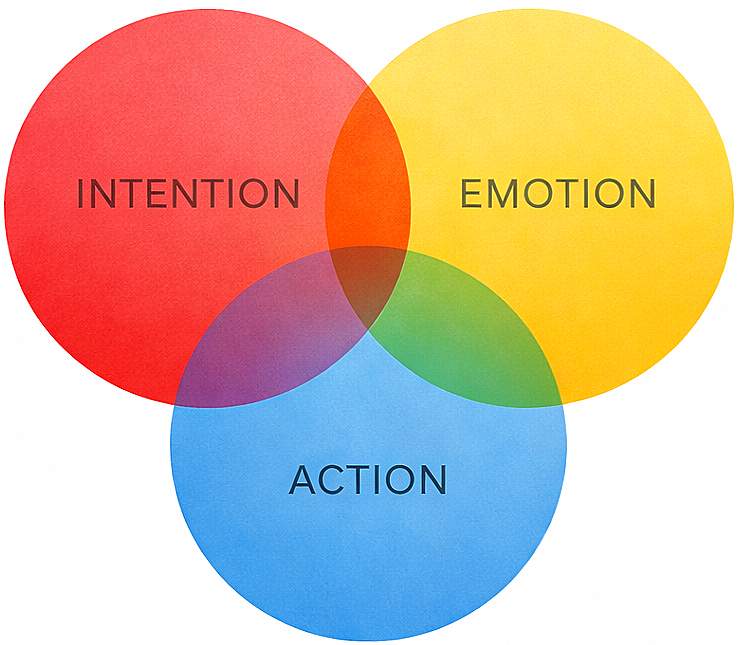
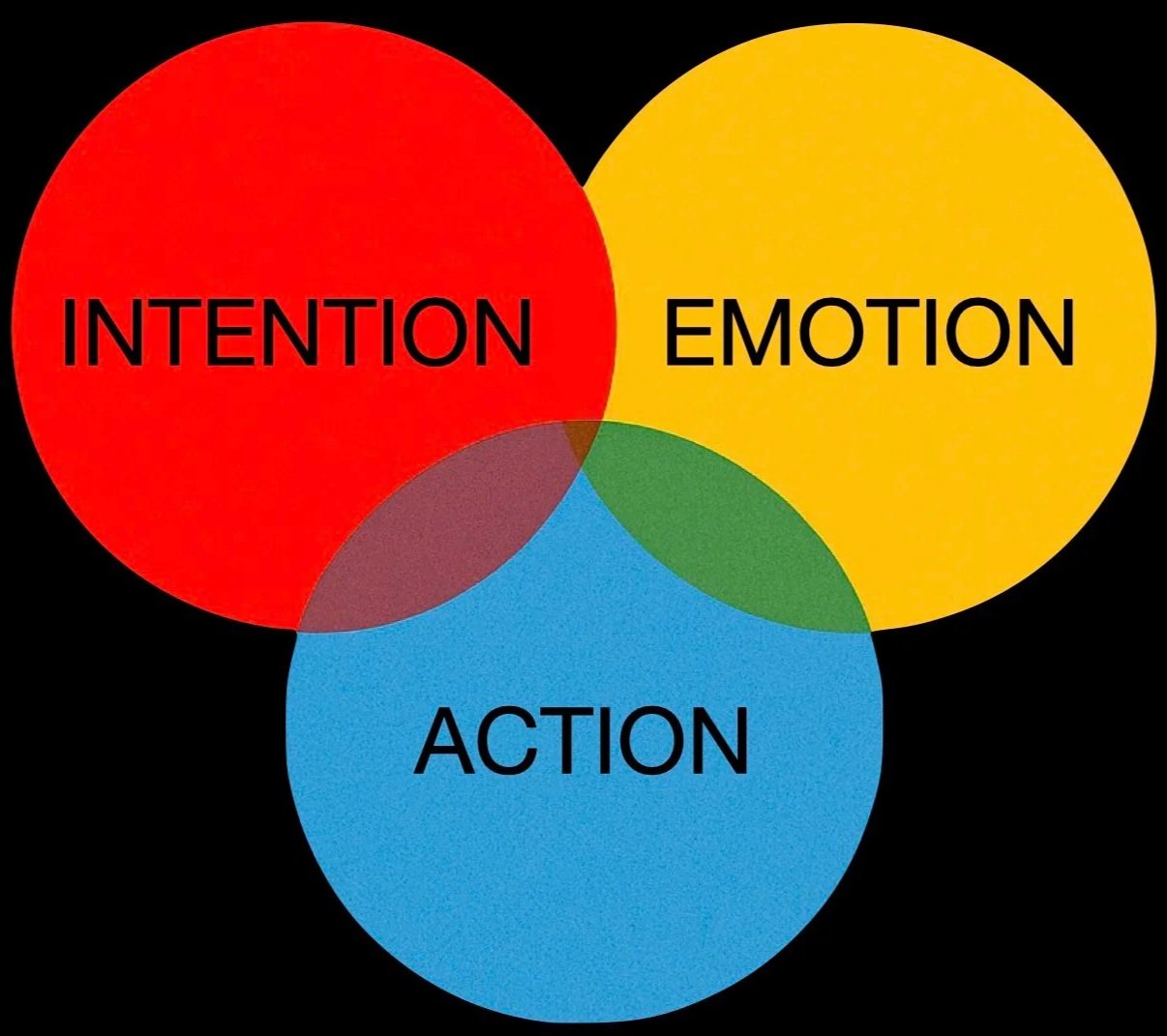
Technique is Relational
Technique emerges from the relationships
between intention, emotion, and action.
The nervous system organizes movement,
and the performer’s emotional history
shapes the outcome.
Your biography imprints
on your biology.
Technique isn’t just linear.
It’s relational.
It’s emergent.
It tells a story.
Tension doesn’t appear out of nowhere.
It emerges from how the links in
the Behavior Chain interact.
When I gave my TEDx talk,
“Science of the Groove,”
I explored how emotion sits
between intention and action—
shaping how we practice and perform.
I’ve now expanded the idea into a chain.
🔶Emotion organizes movement.
♦️Movement becomes behavior.
🔷Behavior shapes technique.
Organizing.
Becoming.
Driving.
Organizing movement requires
emotional re-inhabitation of the body.
🔶Rehab
Changing behavior requires
retraining old tension habits.
♦️Dehab
Shaping efficient technique requires
pre-habilitating movement solutions,
now and in the future.
🔷Prehab
When exploring Rehab, Dehab, and Prehab,
the key leverage point is feeling.
Feeling is the tool Somatic Drummers
use to reorganize
emotion, movement, and behavior.
When performers refine their
awareness of feeling,
technique emerges naturally,
bringing greater ease
and joy to performance.
Feel Better → Play Better
Part 3 “The Trinity”
The keys to unlocking more joy in performance
Rudiments for Your Rudiments
Now the structure is clear,
but understanding the structure
does not stabilize the system.
Stabilization occurs through practice.
In part four of the ADAM Method series,
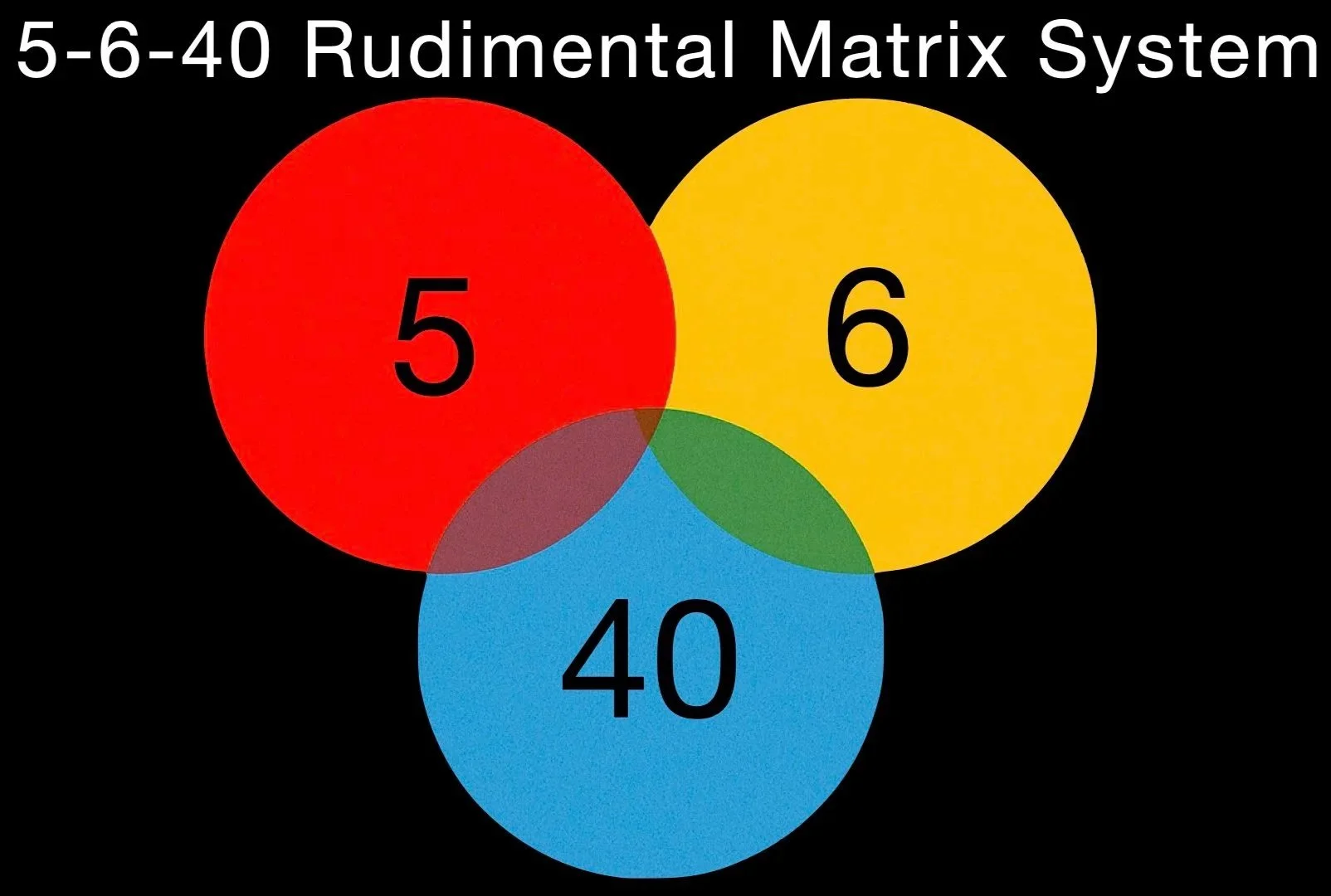
I introduce the 5-6-40
Rudimental Matrix System.
Five Schematic Rudiments:
locate tension patterns.
Six Somatic Rudiments:
reorganize them.
Forty Drum Rudiments:
stabilize the results over time.
This is where feeling sharpens skill.
Performers stop fighting technique,
and begin stabilizing
the structure beneath it.
Technique cannot be
stabilized without
tuning the instrument
that produces it—
the nervous system.
🔶 The yellow pill is the leverage.
♦️ The chain explains the mechanism.
🔷 The iceberg reveals the structure.
These principles form the basis of the
Somatic Drummer training approach,
which is explored further through
structured practice and guided study.
The question then becomes:
Continue practicing the old way? Or—
Remix Your Matrix.
Part 4 “The Practice”
The 5-6-40 Rudimental Matrix System

The Red Light Moment
Years ago, a Brazilian dance
instructor/ Feldenkrais Practitioner,
Carol Bach-Y-Rita, gave me
what became one of the most
important drum lessons of my life.
As we went through Feldenkrais and
Brazilian dance exercises she noticed a
consistent pattern in my movement—
something I had never seen.
When I shifted my weight to
the balls of my feet,
my shoulders moved forward slightly.
I had spent years working on
relaxing my shoulders, but the
problem wasn’t just my shoulders.
It started in my feet.
On the drive home I was replaying
this session in my head.
Just as I pressed down on the
brake to stop at a red light—
it happened again.
My shoulders moved slightly forward.
I felt my chest muscles activate.
My breathing felt a bit more restricted.
My weight had shifted forward,
and I noticed a balance-tension
coupling between my shoulders and feet.
Carol helped me
to notice the behavior,
which allowed me to
identify the pattern.
That awareness changed my
playing permanently, not because
it fixed everything instantly,
but because I could now clearly
feel the substrate mechanism and
fine tune my nervous system.
Tension hides what is driving our technique;
but once something becomes visible,
it can become more intentional.
Somatic Drummer is a practical
method for identifying, interrupting,
and reorganizing the behavioral patterns
through which technique emerges,
using feeling as a tool to make
the invisible mechanisms of
performance → visible.
The Somatic Drummer Framework
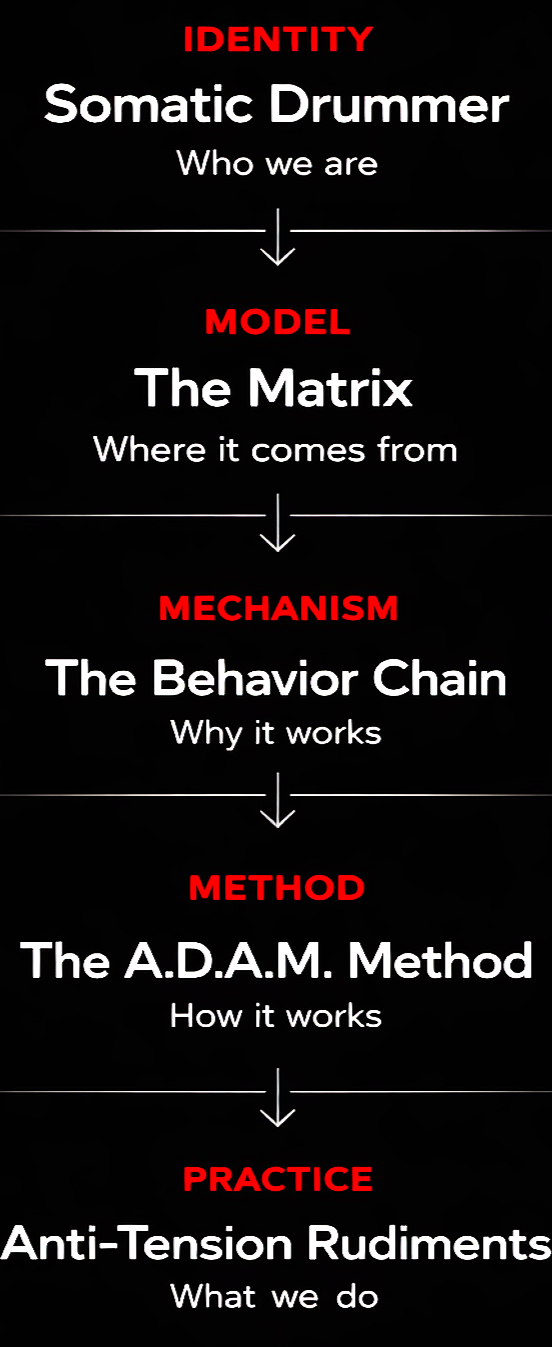
Research & Practice Foundations of the Somatic Drummer Model
The Somatic Drummer Model draws on
insights from performance science,
embodied cognition, motor learning,
somatic practice, and
contemporary neuroscience.
The following works represent key
influences that informed the
development of this model.
Détári, A. (2022). Musician’s Focal Dystonia: A New, Holistic Perspective. Doctoral Dissertation, University of York, Department of Music.
Bernstein, N. A. (1967). The Coordination and Regulation of Movements. Oxford: Pergamon Press.
Kelso, J. A. S. (1995). Dynamic Patterns: The Self-Organization of Brain and Behavior. Cambridge, MA: MIT Press.
Cappuccio, M. (Ed.). (2019). Handbook of Embodied Cognition and Sport Psychology. Cambridge, MA: MIT Press.
Gray, R. (2022). How We Learn to Move: A Revolution in the Way We Coach and Practice Sports Skills. Cambridge, MA: MIT Press.
Porges, S. W. (2011). The Polyvagal Theory: Neurophysiological Foundations of Emotions, Attachment, Communication, and Self-Regulation. New York: W. W. Norton & Company.
McGilchrist, I. (2009). The Master and His Emissary: The Divided Brain and the Making of the Western World. New Haven: Yale University Press.
Levine, P. A. (2015). Trauma and Memory: Brain and Body in a Search for the Living Past. Berkeley, CA: North Atlantic Books.
Barrett, L.F. (2017). How Emotions Are Made: The Secret Life of the Brain. Boston, MA: Houghton Mifflin Harcourt.
Polatin, B. (2013). The Actor’s Secret: Techniques for Transforming Habitual Patterns and Improving Performance. Berkeley, CA: North Atlantic Books.